
Why Does E. coli Come Back After You Finished the Antibiotics?
Medically reviewed by our MD Laboratory Director (a role required by CLIA; the director's name is on file in the CMS CLIA database, #45D2048957, and can be verified independently) · Editorial policy
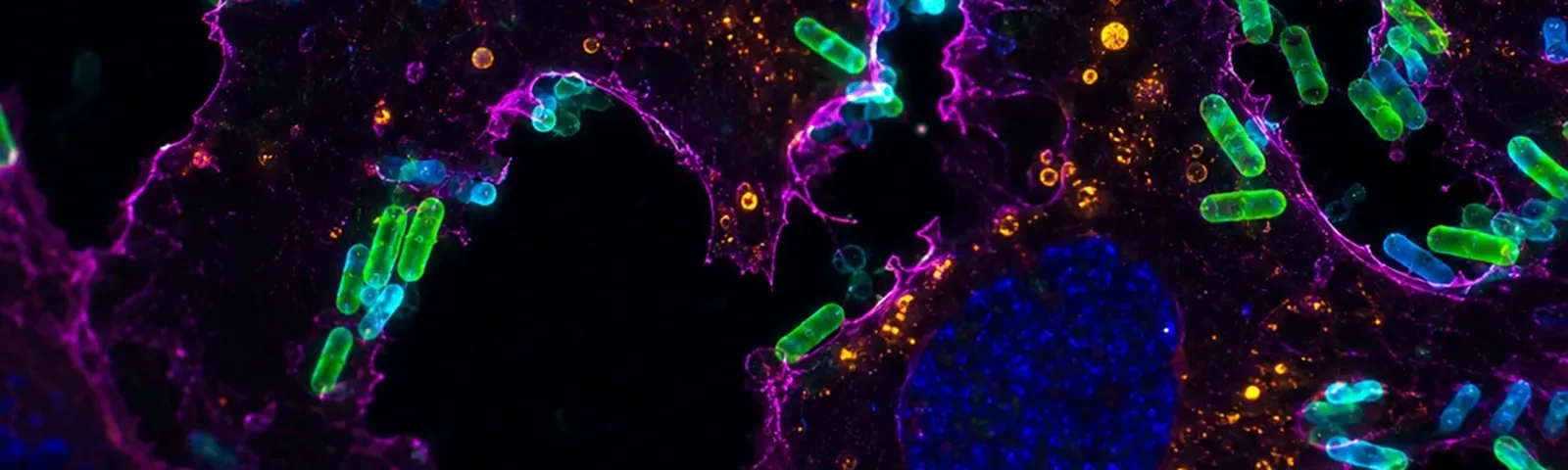
UPEC does not just float in urine. It attaches, invades, and hides.CLIA #45D2048957 · CAP #8722734 · Same-day results · Walk-ins welcome
Because uropathogenic E. coli (UPEC) is not simply floating in your urine waiting to be flushed. It uses fimbrial adhesins to bind to the bladder epithelium, invades those cells, and can form intracellular bacterial communities — a protected reservoir that antibiotics in the urine do not reliably reach. When treatment ends, the reservoir can seed a new infection.
Not sure what you need? Text us and we will set it up.
📱 Text (713) 832-8892 📞 Call (713) 266-0808
📱 Text (713) 832-8892 📞 Call (713) 266-0808
3707 Westcenter Dr Suite 100, Houston, TX 77042 · Walk-ins welcome
What is happening at the cell surface
| Step | Mechanism |
|---|---|
| 1. Attachment | Type 1 fimbriae bind mannosylated receptors on bladder cells |
| 2. Invasion | Bacteria are internalized into the epithelium |
| 3. Community formation | Intracellular bacterial communities develop — physically shielded |
| 4. Emergence | Bacteria re-emerge and reinfect after treatment stops |
This is why "the antibiotic worked, and then it came back three weeks later" is such a common story. The antibiotic did work — on the bacteria it could reach.
What follows clinically
It means recurrence deserves a diagnosis rather than a repeat prescription: identify the organism, check resistance genes, and let a physician decide on duration and strategy — see recurrent UTI.
We name drugs, never doses. Treatment statements follow IDSA, AUA and ACOG guidance; dose and duration are a physician's decision.
Same day, start to finish. Sample by 1:00 PM → results at 4:30 PM → if treatment is clinically appropriate, a licensed physician in our partner network sees you between 4:30 and 6:00 PM, a few minutes away. That window is reserved for patients tested here, and your slot is held the moment we take your sample — the slot is held, not hunted. On your own, a same-day appointment is nearly impossible; at an urgent care, you wait in the queue. STAT: ~2 hours, sample in by 3:00 PM.
FAQ
- Does this mean antibiotics do not work?
- They work. The point is that a reservoir can survive them, which changes how recurrence should be managed.
- Is there a test for the reservoir?
- Not directly. What we can do is identify the organism and its resistance genes accurately, and stop the guessing.
- Does D-mannose help?
- It is studied in this context; evidence is limited. Ask the physician rather than a supplement label.
- What should I do next?
- Get tested properly during an active episode — same-day, with resistance genes.
Not sure what you need? Text us and we will set it up.
📱 Text (713) 832-8892 📞 Call (713) 266-0808
📱 Text (713) 832-8892 📞 Call (713) 266-0808
3707 Westcenter Dr Suite 100, Houston, TX 77042 · Walk-ins welcome
References
- NIDDK — Bladder Infection (UTI) in Adults
- AUA — Recurrent Uncomplicated UTI Guideline
- IDSA — Urinary Tract Infection Guidelines
- Our CLIA #45D2048957 and CAP #8722734 credentials — verify them yourself
Reach us — privately
No name needed to ask a question. Text is the fastest way to reach us.
Or send your details below — we will reply by text or email during open hours.